-
Jordan Mitchell
- No Comments
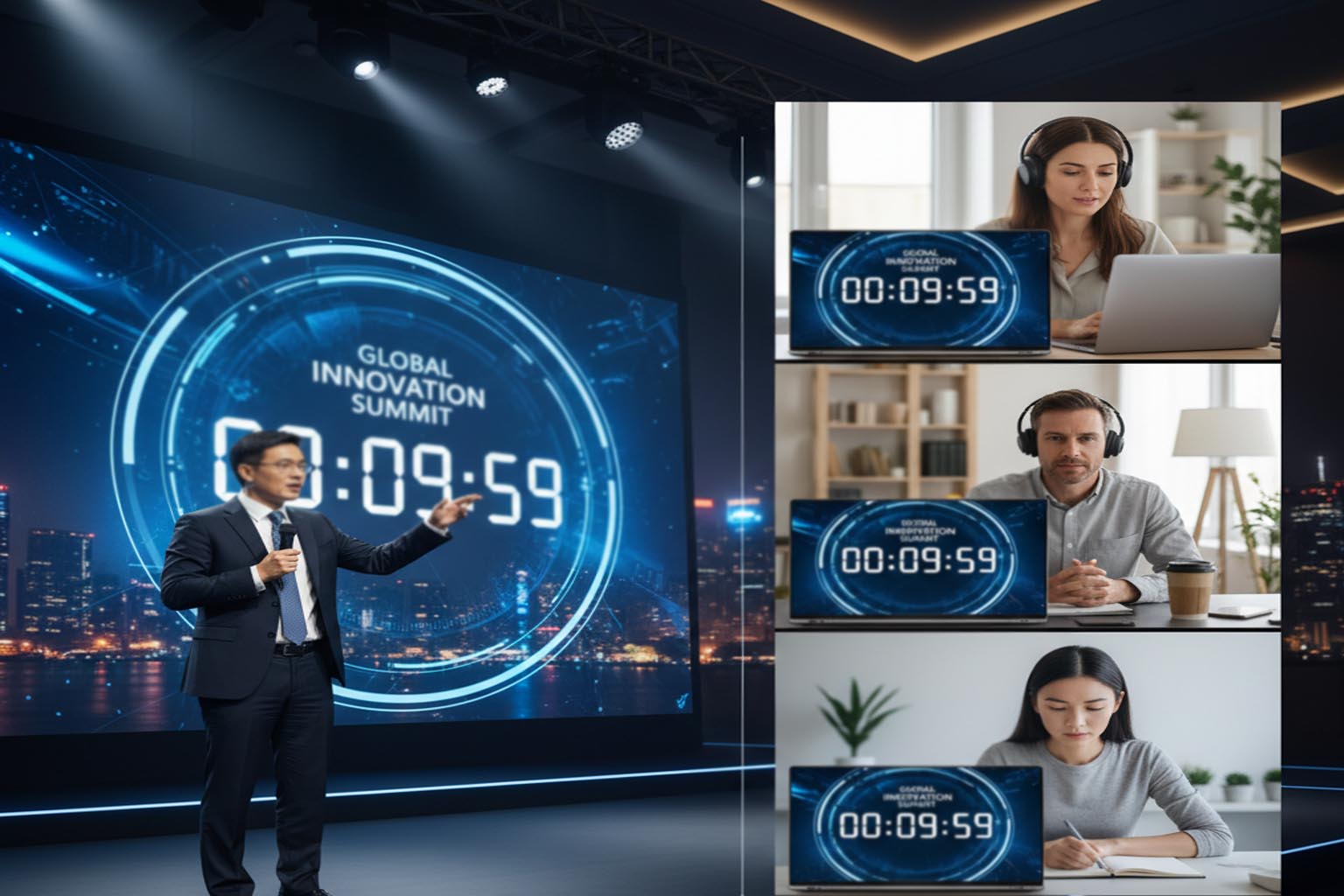
Global digital economy summits live and die by timing. Speakers join from different continents. Audiences log in across workdays and weekends. A single late session can ripple through an entire agenda. Run of show planning is the quiet system that keeps everything aligned. It shapes credibility. It protects attention. It respects every time zone in the room.
Organizers who treat scheduling as a strategic discipline avoid chaos. They create confidence. They also reduce speaker stress and audience drop off. A shared reference point helps. Many teams rely on a countdown timer to anchor rehearsals and live transitions, especially when sessions must end cleanly across regions.
This article breaks down how global summit planners design a reliable run of show. It also includes a practical daylight saving checklist that prevents costly misalignment. Every section connects scheduling decisions back to trust, flow, and global participation.
At a Glance
International run of show planning blends precision with empathy. This guide covers time zone logic, speaker coordination, DST risk, and live execution habits that keep digital economy events on track.
Why Global Run of Show Planning Is Different
Local events move on a single clock. International summits do not. A keynote in Hong Kong may open a day that ends in California. Each audience segment brings different expectations and energy levels. Run of show planning becomes a balancing act between fairness and focus.
Digital economy audiences are also highly informed. They track markets, policy updates, and product announcements in real time. A delayed panel or rushed Q and A feels careless. Scheduling accuracy signals professionalism and respect for participants who plan their day around the agenda.
This challenge grows with scale. As more regions join, the margin for error shrinks. That is why strong timing frameworks matter more than flashy production.
Anchoring the Agenda With Time Awareness
Every run of show starts with a master clock. Organizers choose a reference time zone, then map all sessions against it. This avoids confusion during rehearsals and live execution. Teams that skip this step often rely on mental conversion, which fails under pressure.
Clear time awareness also supports virtual attendance. Many summits already discuss market timing and synchronization, a theme explored in global market timing. Event schedules follow the same logic. Precision builds confidence.
Once the reference clock is set, every cue, slide change, and handoff is defined in minutes and seconds. This level of detail feels excessive until the first live session begins.
Designing Sessions That Respect Global Energy Cycles
Not all hours perform equally. Early mornings favor tactical updates. Late evenings support discussion. Midday works best for high profile keynotes. Run of show planning accounts for human rhythm, not just availability.
Digital economy topics often demand concentration. Panels on policy, security, or infrastructure cannot be rushed. Planners space demanding sessions between lighter formats to maintain engagement across time zones.
Breaks matter too. Short pauses help speakers reset and give audiences time to absorb information. They also create buffer space that protects the rest of the schedule.
Using Simple Tools to Enforce Timing Discipline
Live events move fast. Speakers lose track of time. Moderators juggle questions. Simple tools keep everyone aligned. Many teams use an online alarm during rehearsals and backstage coordination to signal hard stops without public interruption.
These cues feel small but they prevent overruns that cascade into later sessions. The goal is not rigidity. It is predictability.
Time focused tools also help distributed teams. Producers in different countries share the same signals, reducing miscommunication during live handoffs.
Structuring the Run of Show Document
A run of show document is more than a timetable. It is a narrative of the event. Each line answers who speaks, what happens, and how long it lasts. Good documents are readable under stress.
Clear labeling helps. Session titles, speaker names, technical notes, and timing cues are separated visually. Color coding often highlights critical transitions or live risks.
Many organizers also include backup actions. If a speaker drops, the plan adapts without panic.
Core Elements Every Run of Show Should Include
- Reference time zone and local equivalents
- Exact start and end times per segment
- Speaker join and exit cues
- Technical checks and buffer windows
- Escalation contacts
Numerical Timing Principles That Reduce Risk
These principles show up repeatedly in successful global summits. They are simple. They work.
1
Never schedule more than 45 minutes without a pause. Attention drops sharply after that point.
2
Add a minimum five minute buffer after every live transition. This absorbs minor delays.
3
Lock keynote start times at least two weeks in advance. This stabilizes promotion and rehearsal planning.
4
Rehearse each live segment at least once on the same clock used on event day.
Daylight Saving Time Pitfalls Organizers Still Miss
Daylight saving time remains one of the most common causes of schedule failure. Different regions shift on different dates. Some do not shift at all. Assumptions break agendas.
Teams often rely on local calendars without verifying offsets. A session advertised correctly in one region can appear an hour off elsewhere. This damages trust fast.
Reliable time conversion resources help. Public references such as the DST overview clarify which regions change and when. Cross checking schedules against this information prevents embarrassment.
A Practical DST Checklist for Global Events
DST checks should happen early. They should also repeat. A single review is not enough.
| Item | Purpose | Status |
|---|---|---|
| Reference time zone confirmed | Ensures single source of truth | Required |
| Speaker local times verified | Prevents missed joins | Required |
| Promotion materials checked | Aligns audience expectations | Recommended |
| Platform time settings audited | Avoids auto conversion errors | Required |
Connecting Timing to Digital Economy Themes
Timing is not just logistics. It reflects how digital systems coordinate activity at scale. Payments settle. Networks synchronize. Markets open and close on precise schedules. Events mirror these dynamics.
That is why timing tools and clocks appear in discussions about virtual participation, including online clocks. Shared time builds shared understanding.
A well run summit demonstrates the same discipline expected from digital platforms discussed on stage.
Rehearsal as a Timing Stress Test
Rehearsals expose weak points. They reveal which speakers overrun and which transitions feel tight. Global rehearsals also highlight connection delays that only appear across regions.
Producers track actual durations against planned times. Adjustments follow. This is where run of show documents earn their value.
Skipping rehearsal saves time early but costs reputation later.
How Timing Builds Trust With a Global Audience
Audiences notice punctuality. Sessions that start and end as promised feel respectful. Over time this builds loyalty. Viewers return because they know their time will not be wasted.
For digital economy summits, trust matters. These events often influence investment decisions, policy debates, and partnerships. Sloppy timing undercuts authority.
Run of show planning becomes part of the event brand.
Closing the Loop on Global Scheduling
International summits succeed when timing fades into the background. Attendees focus on ideas, not delays. Speakers relax. Organizers breathe.
Run of show planning is how that calm is engineered. It blends tools, documents, rehearsals, and awareness of global time realities. With the right structure, even complex digital economy events run smoothly across borders.
Strong schedules do not shout. They simply work.


No Comments